¶Overview Energy launches. A huge disclaimer upfront: this is the space solar energy company that Andrew co-founded and spent the last four years working on, so we cannot in any way be impartial. We do think it is very cool, though. Overview Energy came out of stealth today and announced successful power transmission from a moving aircraft to a ground receiver 5 km below, what we believe is a world first (video). Overview’s mission is to allow existing solar projects to produce power at dawn, dusk, and night, times when clean baseload power is needed but the Sun is weak or unavailable. The company’s vision is to build many geosynchronous satellites, illuminated by the Sun almost 24/7, that transmit power to large existing solar farms on the ground via a wide (~2-5 km across), invisible (near-infrared), and safe (eye safe and less than solar intensity) beam of light. This optical power delivery approach means that no specialized ground receivers need to be built, and the satellites can be a size that is manufacturable and deployable (albeit still very large) with no robotics or in-space assembly. This compares favorably to microwave space solar energy proposals, which require apertures in space that are on the order of a kilometer or more across and which may struggle with safety on the ground. Overview Energy’s next major milestone is a LEO test mission scheduled for early 2028. Overview is hiring! |
|
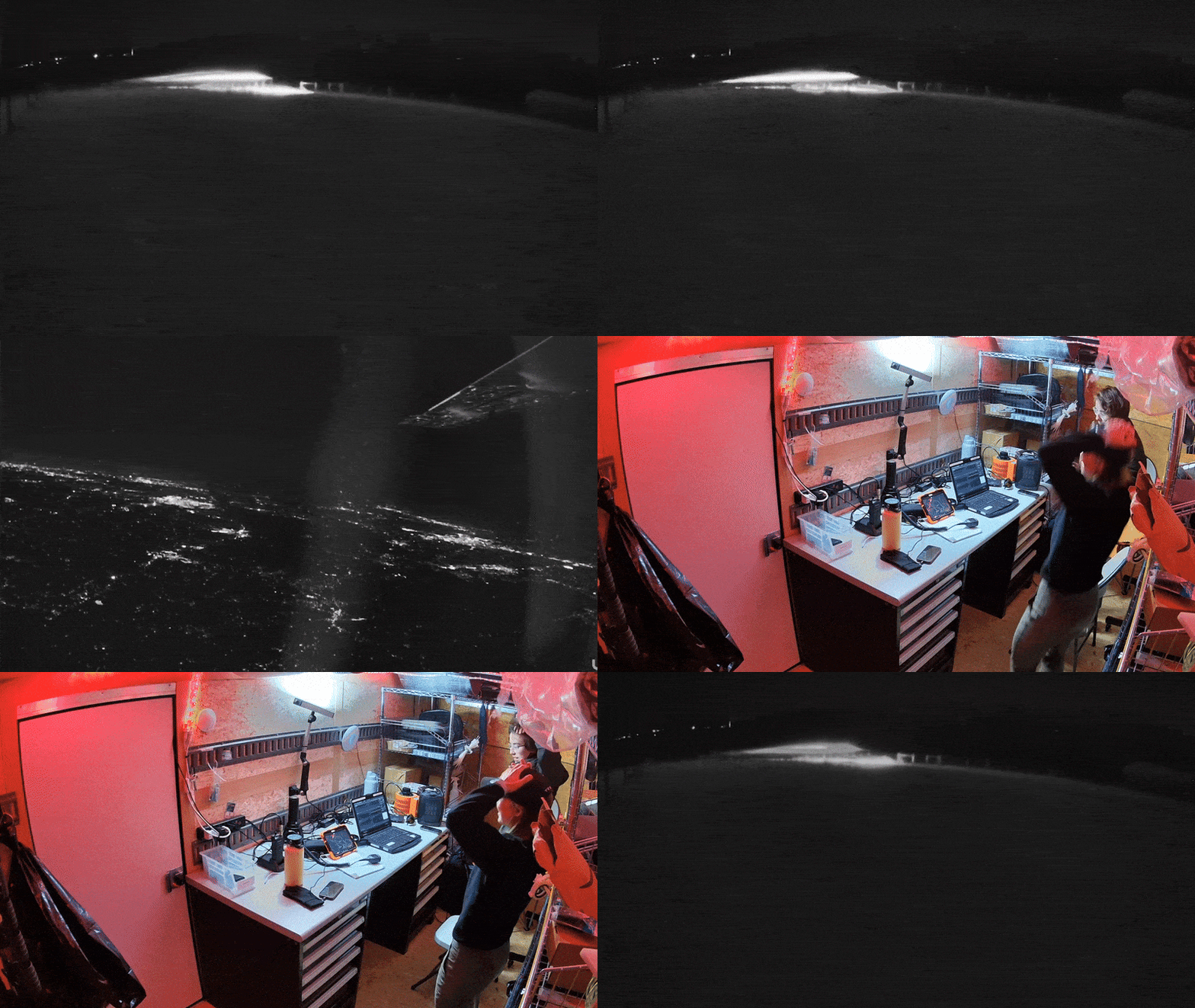 | In this sped-up footage, Overview Energy’s near-infrared laser successfully tracks a solar test installation from a plane circling 5 km above, delivering power to the ground. The spot is invisible to the naked eye, but shows up on a night vision camera. A very tired team rejoices. 🥂 |
|
The Orbital Index is made possible through generous sponsorship by:
 
 |
|
| ¶Scaling a space business often means investing heavily in equipment and technology long before revenue arrives. For nearly 40 years, CSC Leasing has helped deep-tech and space-tech teams acquire the labs, test gear, and manufacturing tools they need without burning equity on depreciating assets. Our flexible, non-dilutive financing preserves cash while adapting to the rapid, iterative cycles of frontier engineering. With a self-funded model and lease lines ranging from $100K to $50M, CSC equips innovators to build, test, and launch what’s next. |
|
¶IM-3. After two almost-landings on the Moon, Intuitive Machine is steadily working on IM-3 (with fixes to its laser altimeter and crater recognition systems). IM-3 is scheduled to launch in the second half of 2026 and is contracted to deliver payloads for NASA, ESA, KASI, and others. It will land in the Reiner Gamma region of the Moon, which contains a lunar swirl, probably caused by unusual local magnetic fields. One interesting payload is JPL’s trio of four-wheeled, solar-powered, carry-on-bag-size CADRE rovers, which will work together autonomously to map an area of the lunar surface and subsurface in 3D with cameras and ground-penetrating radar. They are designed to function for one lunar day (14 Earth days)—presumably, they lack radioisotope heaters to survive the lunar night. CADRE (Cooperative Autonomous Distributed Robotic Exploration) is a step toward autonomous operation (something we discussed in Issue № 229) and multi-robot mission design—the robots form a mesh network and collaborate to map and act as distributed receivers for each other’s radar signals. At the same time, IM-3 relays their comms to Earth. Also onboard IM-3 are ESA’s MoonLIGHT Pointing Actuator retroreflector (paper) for ranging and KASI’s Lunar Space Environment Monitor, which will measure the energy distributions of charged particles on the Reiner Gamma to help understand the formation of lunar swirls and space weathering (paper). |
|
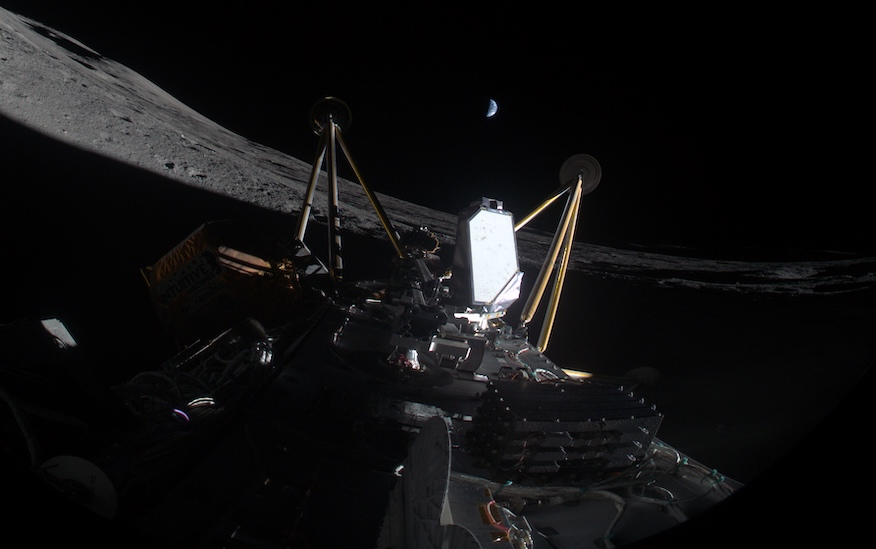 | IM-2, on its side on the Moon in March 2025, suffering a fate that hopefully doesn’t befall IM-3. |
|
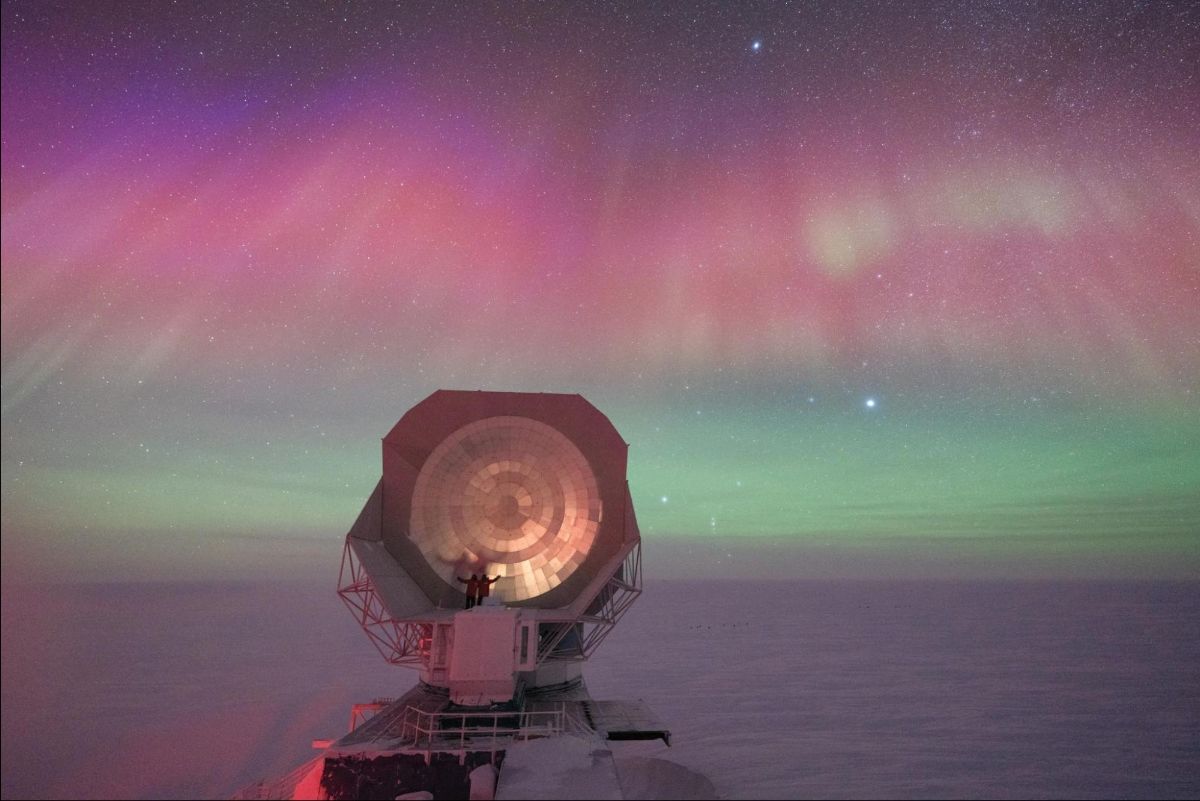
¶Astrophysics, but cold. There are nearly 70 research stations across the 14.2 million km² continent of Antarctica. Antarctica’s high altitude and dry, stable atmosphere provide exceptional conditions for astronomy by helping to minimize atmospheric distortion and reduce infrared sky emissions. Antarctica also experiences very little light pollution, low seismic activity, a six-month polar night, and the presence of circumpolar stars and constellations, which never dip below the horizon, allowing for continuous observation of those targets. A site named Ridge A, ~1,000 km from the South Pole, has been declared the best place on Earth for astronomy. One instrument on Ridge A is the remote-controlled High Elevation Antarctic Terahertz far-infrared telescope, which has been operating since 2012 for submillimeter- and terahertz-wavelength observations. Antarctica’s Amundsen-Scott South Pole Station experiences average temperatures of -49 °C, and is home to four astronomical projects: the South Pole Telescope, the IceCube Neutrino Observatory (the clear Antarctic ice enables the detection of high-energy neutrino interactions), and the BICEP3/BICEP Array. The Long Duration Balloon Facility at Antarctica’s McMurdo Station conducts scientific balloon experiments, launching payloads into the stratosphere for periods of 10-20 days to study the Earth's atmosphere and space. The Chinese Kunlun Station, located just 7.3 km from Dome A (Argus)—the highest point of the Antarctic plateau—hosts three astronomical instruments: the China Star Small Telescope Array with four 14.5-cm telescopes, the Antarctic Survey Telescope (AST3-1 and AST3-2) consisting of three 50-cm instruments, and the near-infrared telescope, which is part of the Kunlun Dark Universe Survey Telescope project. China’s Three Gorges Antarctic Eye, a 3.2-metre radio/millimeter-wave telescope, recently began observations at China’s Zhongshan Station, located near Russia’s Progress II Station and Romania’s Law-Racoviță-Negoiță Station. Some future Antarctic astronomy missions include the Dome A Terahertz Explorer-5, planned for installation at Kunlun; the Polar Large Telescope, to be built at the French-Italian station on the Dome C (Concordia) site; and the Antarctic TianMu Time-domain Astronomical Observation Array at Zhongshan. (Related: lest we forget, Antarctica is also the richest source of meteorites on our planet. Rocks seem to have trouble hiding on ice sheets.) 🔭🐧 |
|
‹Support Us› Orbital Index is made possible by readers like you. If you appreciate our writing, please support us with a monthly membership! |
|
| ¶News in brief. NASA completed assembly of the Nancy Grace Roman Space Telescope, which may launch as early as summer 2026 ● SpaceX received environmental approval to begin building a launch site in Cape Canaveral Space Force Base for Starship Super Heavy launch and landing operations (in addition to their Starship launch tower at Kennedy Space Center) ● Reditus Space, an Atlanta-based startup, raised a $7.1M seed round to develop a reusable reentry vehicle for microgravity research ● Apparently, OpenAI CEO Sam Altman almost invested in Stoke Space amidst exploration into building a SpaceX competitor ● European countries (primarily UK, Spain, France, and Germany) committed over €900B (~$1.05T) to the European Launcher Challenge that funds commercial rocket development ● ICEYE raised a $174.6M Series E to continue scaling their SAR satellites and intelligence services ● NASA delayed an Artemis II dress rehearsal due to a ‘blemish’ on the crew module’s thermal barrier that prevented hatch closure ● SpaceX is privately offering shares at an $800B valuation, and could IPO next year ● Israeli startup Moonshot Space emerged with $12M to develop an electromagnetic ground-based launch system ● Roscosmos replaced the cosmonaut assigned to the next ISS crew mission due to alleged ITAR violations: taking images of SpaceX hardware and documentation during Crew Dragon training ● Chinese commercial rocket builder LandSpace successfully launched its first Zhuque-3 rocket to orbit (capable of 8 tons to LEO when recovered), and the booster came relatively close to sticking the landing, suffering an anomaly late in the flight during the landing burn—this is still an impressive first booster landing attempt, and illustrates how close China’s space industry is to reuse (re-entry video). |
|
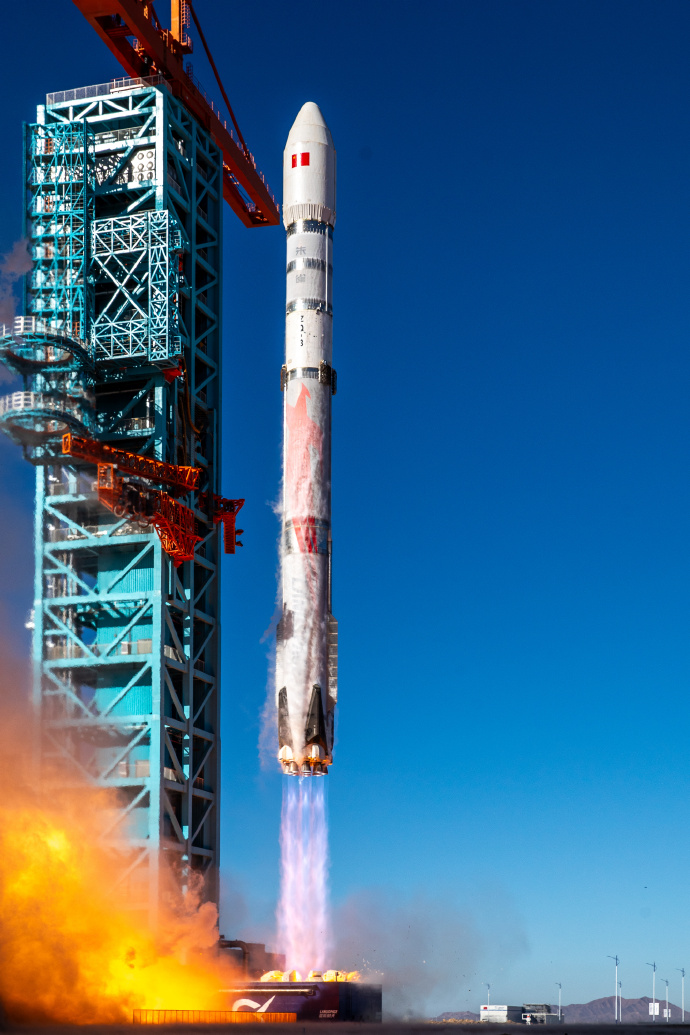 | LandSpace’s Zhuque-3 rocket lifting off from the Jiuquan Satellite Launch Center in northwestern China. Credit: LandSpace |
|
This iconic photo is of Bruce McCandless, the first astronaut to fly untethered in space. His work as part of the team developing the now-retired MMU (Manned Maneuvering Unit) gave humanity its first, and only, access to solo free flight in space (MMU’s descendant, SAFER, is an emergency system and designed for emergency astronaut retrieval, not free flight). If you’d like, you can read the MMU user guide here. | 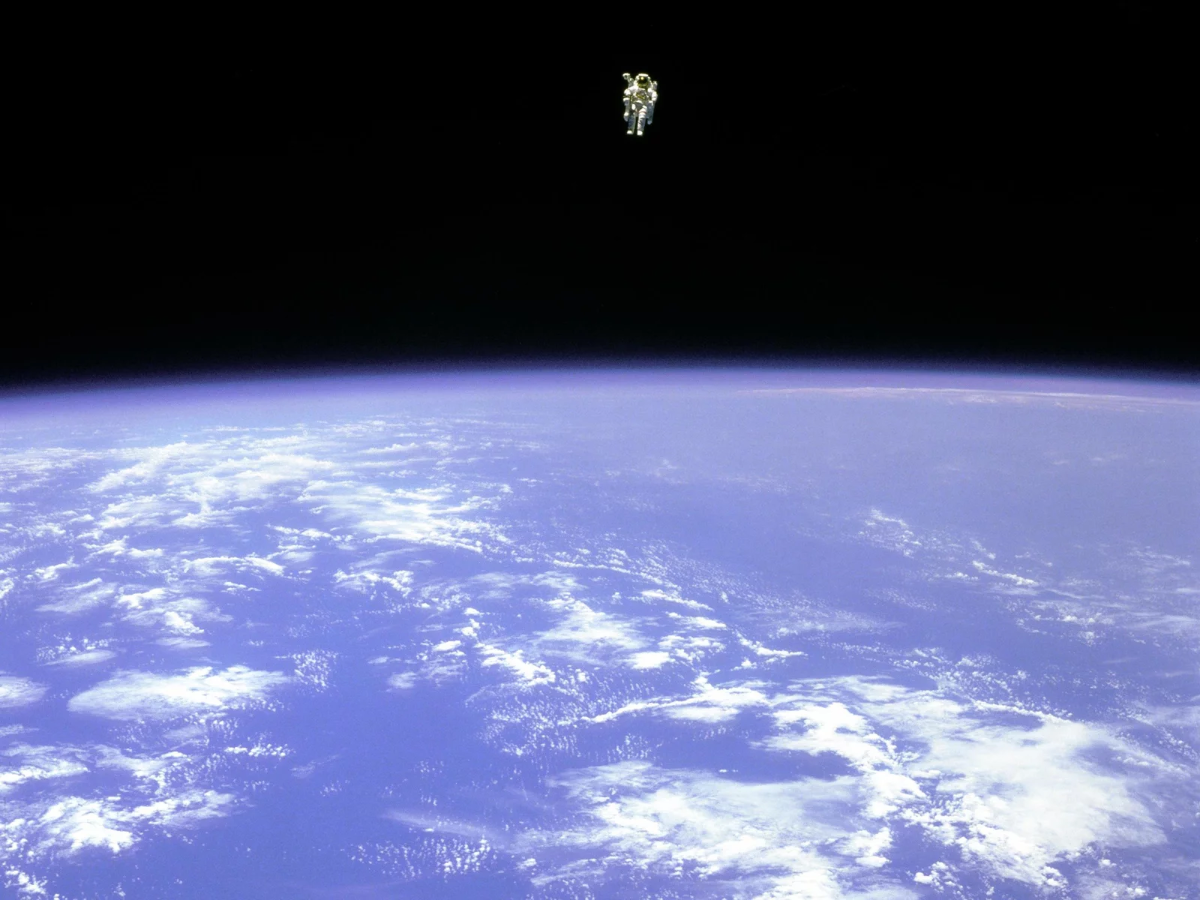 |
|
|